aromatic root
Liquorice
A sweet, earthy-rooty material with dark herbal, woody and anise-like facets, distinct botanically from anise even though the two are closely associated in flavour and fragrance.
Browse Woods, roots & mosses →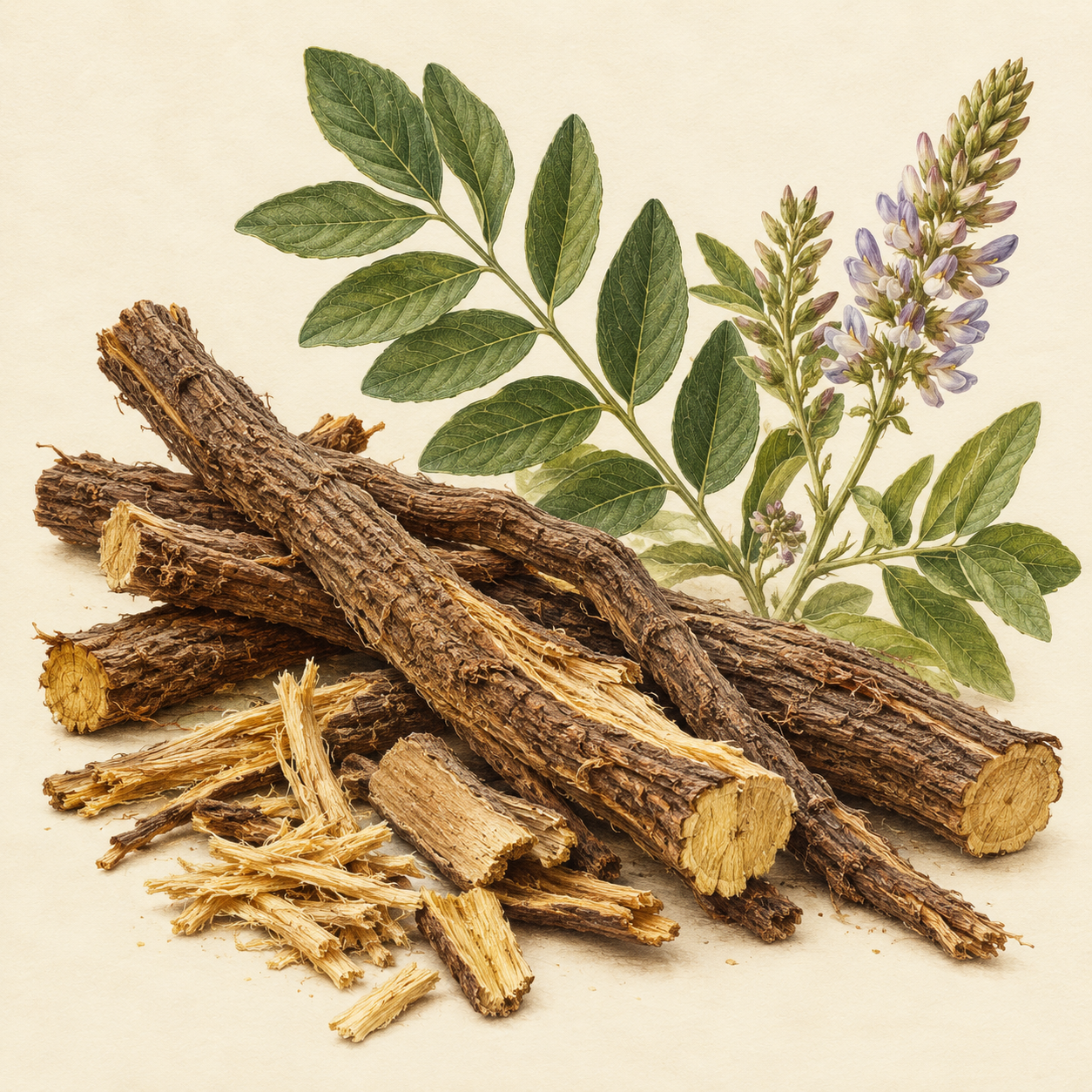
What it is
Liquorice is the aromatic underground material associated with Glycyrrhiza glabra, a perennial member of the pea family. Kew notes that the plant is cultivated for its underground stems, or rhizomes, which are harvested together with the roots and processed for liquorice extract.
The material belongs to a different plant from anise. Their sensory association is nevertheless strong enough that anise-derived flavouring is often used alongside or in place of true liquorice in confectionery.
What to notice
Liquorice material can suggest:
- intense sweetness
- earthy root
- dark herbal tones
- dry wood
- anise-like freshness
- a slightly bitter or medicinal edge
Liquorice versus anise
Liquorice and anise are easy to blur in description, but they are not the same botanical material. True liquorice comes from Glycyrrhiza roots and rhizomes; anise comes from the seed of Pimpinella anisum, while star anise comes from Illicium verum.
That distinction matters in the archive: a source that explicitly says liquorice or licorice maps to Liquorice, not automatically to Anise or Star Anise.
In fragrance
A fragrance can present liquorice through natural root-derived extracts, tinctures or a reconstructed liquorice accord. Unless the source specifies the extraction, The Aroma Book treats Liquorice as the material concept without assuming which form was used.
REFERENCE SOURCES
Kew Science · Glycyrrhiza glabra↗