animalic material
Castoreum
A historically important animalic perfumery material with leathery, smoky, warm and phenolic facets; modern perfumery can recreate castoreum-like effects without natural beaver-derived material.
Browse Animalic & hive →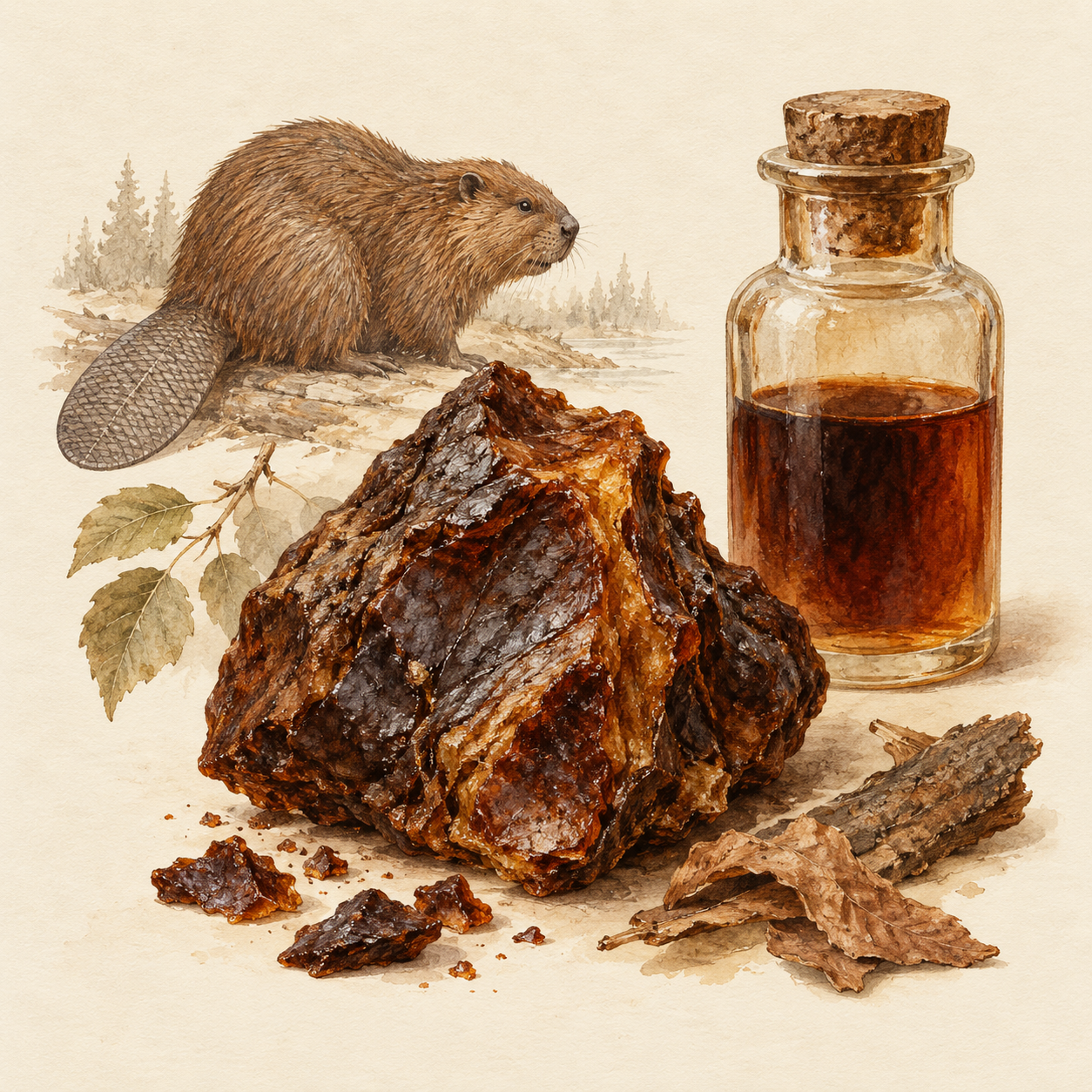
What it is
Natural castoreum is a strongly scented secretion associated with the paired castor sacs of beavers. Beavers use it in scent marking, and the material was historically collected and used in perfumery.
In fragrance, castoreum belongs to the classic animalic palette alongside materials such as civet and musk. A modern castoreum note or accord, however, does not by itself mean that natural beaver-derived castoreum was used.
How it behaves in perfume
Castoreum is usually encountered as a dark supporting effect rather than as a bright standalone note. It can contribute leathery, smoky, warm, phenolic and animalic facets, often reinforcing woods, resins, tobacco or leather structures.
At low levels it can add depth and a worn-leather or warm-animalic quality. Pushed harder, the effect can become more overtly smoky, tarry or pungent.
What to notice
Look for:
- dark leather-like depth
- smoky or slightly tarry facets
- warm animalic undertones
- phenolic dryness
- extra weight around woods, resins or tobacco
Natural versus reconstructed castoreum
The word castoreum on a perfume note list should be treated as an olfactory reference unless the source explicitly establishes the use of natural material. Modern fragrance chemistry can construct castoreum-style effects from non-animal-derived odorants.
Keep the label precise
A fragrance smelling castoreum-like is not evidence that castoreum is present. The Aroma Book therefore creates a Castoreum material relationship only when a manufacturer or accepted reference source explicitly supports it.
REFERENCE SOURCES
Wikipedia · Castoreum↗